Marla Geha is on a mission to chart a new pathway for US-enlisted military veterans who dream of working in science.
The Howard Hughes Medical Institute Professor and Yale University astrophysicist is passionate about STEM education, and she believes that a single stint doing research in a lab gives a veteran the confidence needed to stick with that dream. After all, Geha has seen firsthand how veterans – many of whom spend their military years working in science, engineering, or medical support roles – often return to civilian life unsure of how to apply their unique experiences to a pertinent academic degree.
According to a 2021 White House Office of Science and Technology Policy reportexternal link, opens in a new tab, approximately 43 percent of military veterans at some point pursue a STEM major, but only eight percent of the veteran workforce is employed in STEM occupations. The report notes that the primary reasons for this gap include limited awareness of pathways to STEM education and careers, and challenges with “translating education and skills gained during military service” into those same pathways.
Geha saw an opportunity to address this gap. In 2017, she was named an HHMI Professor and received $1 million over five years to establish the Research Experience for Veteran Undergraduates programexternal link, opens in a new tab (REVU). Officially launched in 2019, this nine-week summer research program at Yale immerses a select group of veterans in the scientific life. Together with REVU program manager Jeremy Bradford, Geha connects participating veterans with Yale faculty and their lab groups on a research project that aligns with their specific scientific interests. In addition to their lab project, REVU fellows engage in an active professional development program aimed at honing the skills necessary to be successful in STEM. Throughout the experience, participants work, study, and explore on-campus life together, forging bonds only fellow veterans can share.
Geha recognized the importance of these relationships, despite having no prior connections to the military herself. Nearly a decade ago, she stumbled on a Yale Daily News article about the Warrior-Scholar Projectexternal link, opens in a new tab (WSP), an initiative launched by three Yale alumni. WSP – for which Bradford now serves as director of operations – has since grown into a major nonprofit, offering college preparatory bootcamps and other resources across the US to position veterans for success in college.
Geha was inspired; in 2013, she launched a two-hour science crash course for WSP which, in 2016, expanded into a one-week STEM program that now a dozen campuses host each summer. “The impact of the Warrior-Scholar Project was so immediate and so powerful,” says Geha, noting that alumni routinely describe their WSP experience as “life-changing.” But, Geha realized that WSP was only designed to facilitate the transition from the military into an undergraduate degree program. As such, she began to look for similar programs that could provide continued support for enlisted veterans as they progress through their undergraduate studies in STEM and consider graduate school or employment.
But Geha’s search yielded few options. Although many higher education and nonprofit institutions offer scholarships or other financial support for veterans, very few provide veterans with hands-on research experience during their undergraduate years. In 2020, Congress passed the Supporting Veterans in STEM Careers Actexternal link, opens in a new tab, through which the National Science Foundation offers several programs – including undergraduate research supplements – to help veterans transition into STEM careers. But, more momentum is needed, says Geha.
Currently, there is a lack of available data to track exactly how many enlisted veterans enrolled in a STEM degree pathway go on to work in STEM after graduating. But, what is known is that many veterans transition to undergraduate studies and then find out they’re not the typical student, Geha says. Veterans who once served as medical laboratory technicians or engineers suddenly struggle to find hands-on learning opportunities more often reserved for graduate students or postdocs, who are typically closer to their own age. HHMI has long supported undergraduate institutions in establishing hands-on research experiences – particularly for first- and second-year students. Among such efforts are HHMI’s Science Education Alliance (SEA) research projects, such as the SEA-PHAGES programexternal link, opens in a new tab, which is jointly administered by HHMI Professor Graham Hatfull at the University of Pittsburgh.
“One of the biggest challenges we face with recruiting applicants to REVU is that many student veterans talk themselves out of applying in the first place,” Geha says. “They tell themselves, ‘No, I’m not good enough.’ But, if they connect with someone who has been where they have been and who has succeeded in the program – and if that person can say to them, ‘I’m doing this even though I never thought I could’ – then that can make all the difference.”
To date, 24 US veterans have completed the REVU program at Yale, advancing research in areas ranging from plant biology to immunotherapy design to astrophysics. Thus far, the majority of the program’s participants are still completing their undergraduate studies; three REVU alums have since been accepted into medical school, while others weigh their options for graduate school or employment in STEM. Half of the 2022 REVU program graduates returned to Yale’s campus last summer to support the most recent cohort as they presented their final research posters.
Although REVU is one of the only programs of its kind tailored specifically for undergraduate veterans, Geha and Bradford hope other programs with similar missions will follow, Geha says.
“REVU is more than just an academic endeavor; it’s a transformative experience for veterans and an inspiration to myself and everyone involved,” Geha says. “This program not only bridges the gap between military service and academia, but it also fosters a sense of belonging and
community, ultimately changing the lives of everyone who participates.”
HHMI thanks REVU alums Kenneth Simmons, Jr., Trinh “Isabelle” Phan, and Ashley Vanegas for sharing their stories with us.
“You’re the only person in the world who knows the answer.” — Kenneth Simmons, Jr.
After completing their years of military service, many veterans who choose to return to school face a daunting transition period, enrolling in two- and four-year colleges alongside students who are often more than 10 years their junior.
“When it comes to the Research Experience for Veteran Undergraduates programexternal link, opens in a new tab, I don’t think there could have been anything better to prepare me to make the jump from community college to a four-year university, especially after being far removed from school for so long,” says Kenneth Simmons, Jr., a 2023 REVU fellow who graduated from Fayetteville Technical Community College in North Carolina and is now studying philosophy while fulfilling pre-medicine requirements at Princeton University. Simmons is also a Warrior-Scholar Projectexternal link, opens in a new tab alum who attended the program’s STEM bootcamp at MIT in 2022.
An Army veteran, Simmons served 14 years of active duty, first as a medical laboratory technician and later as a Special Operations medic. “Coming to REVU from a community college, I felt like I was kind of an anomaly, even within my cohort, because a lot of the other students in the program were in their junior or senior year at a four-year institution,” he says. “When I first got to Yale, it was incredibly overwhelming, just like Princeton is. But, what made REVU so great was that it allowed me the chance to get overwhelmed, consequence-free.”
In the REVU program, Simmons felt like he could follow his curiosity even if it took him out of his comfort zone, he says. He explored the world of epigenetics in associate professor Bluma Lesch’sexternal link, opens in a new tab lab, zeroing in on Traf6external link, opens in a new tab, a bivalent developmental gene that plays a major role in hair, skin, and nail development as well as immune function. Understanding exactly how and when Traf6 “turns on” or “turns off” could lead to new or enhanced treatments for a wide variety of diseases.

The opportunity to work in Lesch’s lab was an “incredibly encouraging” experience, Simmons says, noting that REVU offered him much more than a typical internship could. “[Howard Hughes Medical Institute Professor and REVU program director] Marla Geha and [REVU program manager] Jeremy Bradford baked these sessions into the program where we would all have classroom time to simply talk about being a student and being a researcher,” he says. “When you combine that dedicated classroom time with the life experience of a veteran who has a unique work ethic, things happen. My REVU cohort members are some of the smartest people I’ve ever met in my life, and some of the hardest-working people I’ve ever met, and it showed every day.”
One day, Simmons found himself stuck on an epigenetics research question and, naturally, turned to Google for help. “The only things that popped up were all tied to work that Dr. Lesch’s group had done,” Simmons says. Around the same time, lab member Kira Marshall, a Yale graduate student, saw that Simmons was feeling stuck and she helped him put his experience into perspective. “She told me that there’s this moment where, after you’ve been bumping your head against the wall [trying to find a solution], you get a breakthrough, and you realize you’re the only one in the world who knows the answer.”
Although Simmons’ father and all his paternal uncles served in the Army, Simmons never intended to join the military. Despite knowing he wanted to go to college, he graduated high school without a clear idea of what he wanted to study, and he recalled how the military provided his family with opportunities and stability. He decided to defer entering college and enlist in the Army. During his service, Simmons transitioned into Special Operations, through which he served multiple deployments in Africa in both non-combat and combat-ready roles, mostly with a focus on providing emergency medical services to treat trauma patients on the ground while awaiting a medical evacuation.
“It was a very eye-opening experience for me. I was the only Black man in my unit, but I was in Africa,” he says. “It was something that I hadn’t even fully understood until then — what it means to be around people who look like me. And, the people I served with there, they’re my brothers to this day. When you’re in situations where you have to work together to keep each other alive, that creates a camaraderie that is unlike any other.”
Simmons also says that, like many of his friends who are veterans, he has found that his experiences have given him a unique capacity to tackle challenges head-on. For example, he no longer shies away from speaking up or asking for help, he says.
“When you’re an older person in the classroom or you’re someone who is asking questions that others might be afraid to ask, other students will eventually migrate to you and will want to know about you and your story,” he says. “It can be tiresome; sometimes, you really don’t feel like explaining what war is like. But, when it comes to the perspective that we have, as veterans, [we recognize that] the things that bother students on a regular basis maybe don’t weigh on us so much. It’s not to say that those things aren’t important – they are. For some students, what they face [in college] might be the most difficult thing they have ever faced, and that deserves as much attention as anything else. But, as a veteran, I will probably manage those challenges differently.”
Simmons stresses that this resilience also comes from having a strong support network, something he knows he will continue to lean on as he progresses in his academic journey. Along with a medical degree, Simmons plans to one day earn a law degree; his aim is to help shape health policy and address disparities that disproportionately impact certain communities and populations. He credits the REVU program – and Geha’s efforts to connect him with individuals at Yale Law School – for helping him see that his dreams are possible. “REVU is such an amazing program,” Simmons says. “There’s really nothing else like it in the education space right now.”
Photo 1: Kenneth Simmons on patrol during his years as an active service member. Credit: Kenneth Simmons
Photo 2: Simmons joined other REVU fellows in talking about the program as part of a discussion panel event at the Warrior-Scholar Project Alumni Conference in the summer of 2023. Credit: Fotobuddy/Sameer Khan, courtesy of Warrior-Scholar Project
“I never thought I could do it.” — Trinh “Isabelle” Phan
Research Experience for Veteran Undergraduates (REVU) programexternal link, opens in a new tab alum Trinh Phan, who often goes by “Isabelle,” knows firsthand just how critical it is to have a reliable support system, including family, friends, and educators who have your best interests at heart. Phan spent the earliest years of her life in a forest community in central Vietnam, where she lived under the care of her grandfather, a doctor. When her grandfather died of cancer, Phan dreamed of one day working in cancer biology or medicine to search for new treatments or a cure.
“In my heart, I always wanted to become a scientist, but in the 1990s where I grew up, no one knew how to become a scientist,” says Phan, who is both a 2023 REVU alum and a 2022 Warrior-Scholar Projectexternal link, opens in a new tab alum, and now a fourth-year pre-medicine student at UCLA. After her grandfather’s passing, Phan was readopted by her mother who faced significant financial hardships, as well as a cancer diagnosis of her own. Once Phan finished high school, she decided to put off her plan of pursuing further education to join the workforce to keep her and her mom afloat.
After several years passed, Phan randomly reconnected online with a friend she first met in middle school who had since moved to the US. “We talked and talked and then somehow, over time, things just clicked,” she says. Their relationship blossomed and, in 2017, Phan moved to America so the two could get married. Immediately after Phan’s arrival, her husband encouraged her to get back to her original goal of becoming a scientist.
“I had completely forgotten that it was my dream because nearly 20 years had passed,” Phan says, noting that her husband, who now works as a faculty member at California State University, Long Beach, was always passionate about education.
But, the road to follow their dreams included many hills. Phan gave birth to a boy just as her husband started his teaching career. The young family of three struggled to make ends meet. At times, they relied on Medicare, food banks, and other support programs and, for a stretch of time, they lived out of their car. Phan kept marching on, as best she could, working toward a career in medical science by enrolling in community college.
One day, while on her way to take a history exam, she remembered that she needed to use a black pen. In a scramble, she spotted a nearby Army sign-up booth where she stopped to ask if they had one she could borrow. In exchange, one of the canvassers asked her to write down her contact information, so she did.
“I didn’t know what [the Army] was, to be honest,” she says with a laugh, recalling how the same person told her more about getting involved when she returned their pen. “I told them, ‘I don’t think I’m strong enough.’ I never thought I could do it.” But, the interaction stuck with her and she later did her own research. As she learned more, Phan thought about how grateful she was for the assistance programs that helped keep her family above water after she first moved to the US. Then, the thought occurred to her: She would serve in the Army as an act of gratitude.
Phan finished the semester and signed up for basic training. At the time, she was — as she describes — underweight and physically weak, and her son, not yet two years old then, was still breastfeeding. “I didn’t know what was waiting for me,” she recalls. “Even on the first day of training, I thought, ‘Maybe it’s not that hard.’” She says that being unaware of what was in store enabled her to approach challenges one day at a time; she simply did what was asked of her, and through it all, she carried a photo of her son in the shoulder pocket of her uniform.

After graduating from basic training, Phan was sent to Fort Sam Houston, Texas for advanced individual training to become a 68 Delta, an Army operating room specialist. For civilians who work toward a comparable role, Phan estimates that they undergo two or more years of training. Army trainees, however, have just six months total, about three of which are spent in the classroom. Typically, Phan and her fellow 68 Delta trainees were given weekly exams; anyone who failed three exams was reclassified out of the 68 Delta program, she says. Those who passed moved into clinical training at an Army hospital.
Phan didn’t want to simply pass the program, she wanted to graduate in the top 10 of her class – an achievement that would earn her the ability to choose the site for her clinical rotation. Her aim was to pick a site that was close enough to her home in California so that her husband and son could visit her.
Phan graduated the program first in her class. She completed her clinical training at Madigan Army Medical Center at Joint Base Lewis-McChord just outside Lakewood, Washington – a long but doable trek for her husband and son. Phan’s clinical training confirmed what she long suspected: She was born to work in science and medicine.
Still, one of her toughest challenges has been getting her foot in the door of a lab that would provide her with hands-on research experience. That’s where REVU played a major role, she says. “For me, it’s not just about filling a pre-medicine requirement,” she says. “I want to do research because I want to see how the things I am learning about in books happen in real life. I don’t want to just be a consumer of knowledge; I want to also become a creator of knowledge.”
In the REVU program, Phan worked in Yale assistant professor Mark N. Lee’sexternal link, opens in a new tab lab, where she studied immunology and immune checkpoint inhibitorsexternal link, opens in a new tab – treatments designed to block proteins that would otherwise prevent the immune system from attacking cancer cells. Back at UCLA, Phan is now learning about brain tumor research in a highly sought undergraduate research placement in the neurosurgery department.
In addition to studying molecular, cell, and developmental biology at UCLA, Phan serves in the US Army Reserves with the 921st Field Hospital in Los Angeles. Last fall, she entered UCLA’s highly competitive biomedical research minor program, and in the future, she hopes to participate in the Army’s Health Professions Scholarship Program, which covers full tuition costs for veterans who pursue an advanced medical degree. With no shortage of commitments on her plate, Phan also managed to launch an organization called the Regency Young Scholars Science Project, which brings science experiments and free tutoring services to children in underserved California communities.
Phan says she plans to commission as an officer and one day apply her knowledge of cancer biology toward addressing the heightened cancer risk many veterans face, particularly those who were exposed to carcinogens during their years of service.
Photo 1: While enrolled in REVU, Trinh “Isabelle” Phan conducted immunology research in Mark N. Lee’s lab at Yale University. Credit: Trinh Phan
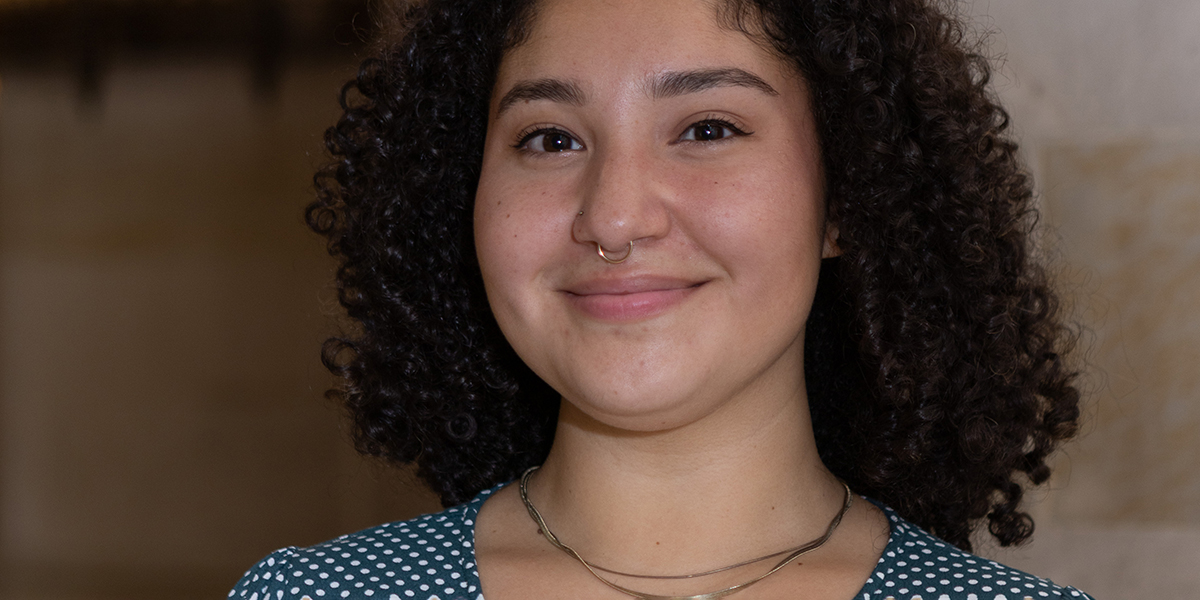
Photo 2: Portrait of Phan taken in 2023. Credit: Robyn Lisone/Yale University
“At first, I felt very intimidated.” — Ashley Vanegas
Trinh Phan isn’t the only 2023 Research Experience for Veteran Undergraduates (REVU) programexternal link, opens in a new tab alum to have served as a 68 Delta. Ashley Vanegas, now a senior at the University of Virginia, served eight years in the US Army, six in active duty with the Walter Reed National Military Medical Center and two in the reserves, stationed at Fort Meade in Maryland. Like Phan, she greatly valued her time in the operating room, logging long hours of meaningful but exhausting work.
But, as she prepared to transition out of the military at the height of the COVID-19 pandemic, Vanegas realized she also wanted to shift out of healthcare. “I started to think about what I like to do, and what hobbies of mine would be worth considering as future career options,” she says. She enjoyed the aspects of her work that touched on science; that, combined with her lifelong love of nature, caused her to look into environmental science. When REVU gave Vanegas the opportunity to work in assistant professor Jenn Coughlan’sexternal link, opens in a new tab evolutionary genetics lab at Yale, Vanegas realized that many of the skills she developed in the operating room were surprisingly helpful in the lab.
During her REVU stint, Vanegas studied plant reproduction and, most specifically, factors that contribute to the reproductive isolation of a plant species known as the monkeyflowerexternal link, opens in a new tab. Vanegas was trained by members of Coughlan’s lab to manually pollinate plants, diligently safeguarding against contamination by using equipment sterilization practices Vanegas first mastered as a 68 Delta. Like Simmons, Vanegas says she first felt lost, at times, transitioning into an academic program after leaving the military; but, in the lab, she realized she had the skills she needed. Sometimes, Vanegas’ more senior labmates would even ask her for advice on how to carry out certain tasks. Soon enough, she realized she had found her place.
“At first, I felt very intimidated, even by the veterans I was surrounded with,” Vanegas says of her REVU experience. “I think that is just imposter syndrome.” Throughout much of her undergraduate studies, Vanegas worried she lagged behind other students who followed a more traditional pathway through college. “Coming into this group of veterans, I realized, gosh, they all feel similarly,” she says. During one class, in particular, each member of the 2023 REVU cohort spoke openly about struggles with imposter syndrome and, later, about what they saw as their best skills and talents.
“I started listening to everyone else’s input and I thought, ‘Oh, I guess I have that, too,’” she says, noting that veterans have unique soft skills such as a natural ability to step up and take the lead on a project.
Like many of her fellow REVU alums, Vanegas feels inspired to “pay it forward.” In the future, she plans to tap her environmental science expertise to help safeguard ecosystems and communities affected by climate change through policy and educational reform.
Photo 1: During her training with the US Army, Ashley Vanegas competed in the Ruck March, during which she had to march eight miles with a 30-pound backpack – known as a ruck – as well as complete a physical fitness exam and a test on US Army facts and tactical knowledge. Vanegas found out the next day that she won the competition. Credit: Ashley Vanegas
Photo 2: Portrait of Vanegas taken in 2023. Credit: Robyn Lisone/Yale University
Media Contact: Halea Kerr-Layton, Media Relations Manager [email protected]
Media Contact: Halea Kerr-Layton, Media Relations Manager [email protected]